

Unraveling the Hidden Fabric of Matter
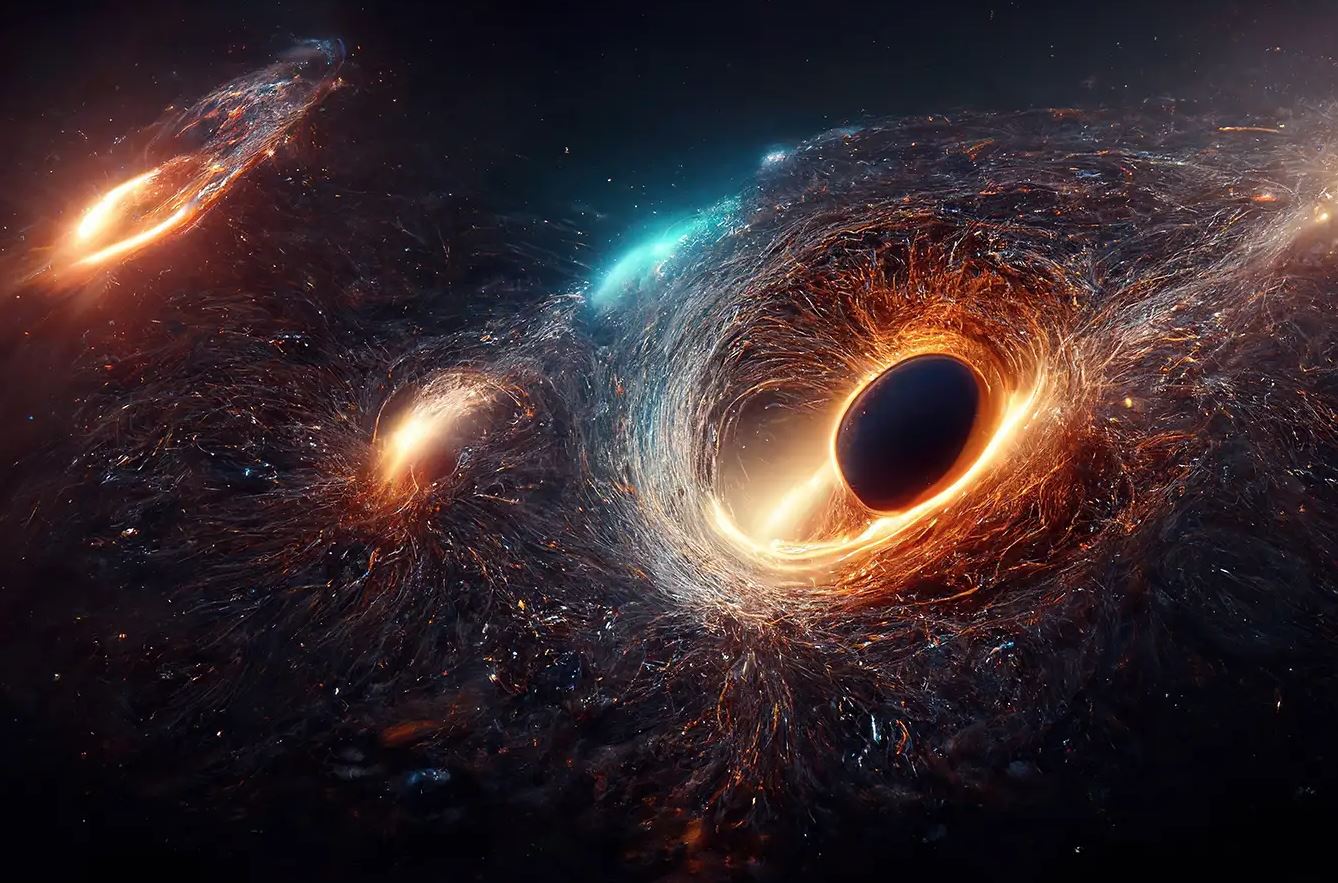
The Particle Physics Continues to Reshape Our Understanding of the Universe
The Birth of Modern Particle Physics
The study of matter at its most fundamental level began as a philosophical pursuit. Ancient thinkers imagined the existence of indivisible atoms, yet it was not until the twentieth century that these ideas took form through experimentation and mathematics. The discovery of the electron by J.J. Thomson in 1897 marked the first glimpse into a world smaller than the atom itself. This was followed by Rutherford’s experiments, which revealed that atoms consist mostly of empty space surrounding a dense nucleus. The subsequent identification of protons and neutrons laid the foundation for a new field of research, one that would soon evolve into particle physics.
As technology advanced, scientists began to probe deeper into the subatomic realm using particle accelerators. These colossal machines used electromagnetic fields to propel charged particles to near-light speeds before colliding them with targets. Each collision revealed fragments of reality too small to be seen but too powerful to ignore. The twentieth century became an age of discovery, yielding particles like neutrinos, muons, and quarks. What once seemed solid was revealed to be a vibrant dance of energy and probability. Particle physics transformed from a branch of classical science into a frontier where nature’s most elusive secrets were waiting to be decoded.
These early discoveries did not merely reveal the structure of matter. They forced a rethinking of the laws that governed it. The realization that particles could behave as both waves and matter, as described by quantum mechanics, revolutionized the scientific worldview. It showed that certainty was an illusion and that reality, at its smallest scale, operates on probabilities. The foundations of modern physics were forever changed, leading to the creation of one of the most elegant and successful frameworks in science: the Standard Model.
The Standard Model: Nature’s Blueprint
The Standard Model of particle physics is a theoretical masterpiece that unites all known fundamental particles and forces, except gravity, into a single coherent structure. It classifies matter into two families: fermions, which make up the building blocks of matter, and bosons, which carry the forces that govern their interactions. Fermions include quarks and leptons, while bosons include photons, gluons, and W and Z particles. Together, they describe the essence of everything in existence, from the fusion reactions in stars to the atoms that form human life.
Each discovery that contributed to the Standard Model was a triumph of human curiosity. The identification of quarks, proposed by Murray Gell-Mann and George Zweig in the 1960s, revealed that protons and neutrons are not elementary particles but combinations of smaller ones. The detection of the W and Z bosons at CERN in 1983 confirmed the electroweak theory, showing that electromagnetism and the weak nuclear force were two aspects of a single phenomenon. Later, in 1995, the top quark was discovered at Fermilab, completing the quark family predicted decades earlier. Each breakthrough strengthened the model’s accuracy, transforming it into a reliable framework for predicting the behavior of the subatomic world.
However, even with its remarkable precision, the Standard Model is not a complete description of nature. It leaves gravity unexplained and does not account for dark matter or dark energy, which together make up most of the universe. This limitation has driven physicists to search for new theories that can unify all forces into a single system. The quest for this deeper understanding has led to some of the most ambitious experiments ever conducted, and it continues to inspire new generations of scientists around the globe.
The Higgs Boson and the Mystery of Mass
Among the most profound mysteries in physics was the question of why particles have mass. For decades, the equations describing subatomic interactions worked only if particles were assumed to be massless, an assumption that contradicted reality. The solution came in the 1960s when Peter Higgs and several other physicists proposed the existence of a field that permeates the entire universe. This field, now known as the Higgs field, interacts with particles to give them mass. The particle associated with this field, the Higgs boson, became the missing cornerstone of the Standard Model.
Proving the existence of the Higgs boson required an extraordinary technological effort. At CERN, the Large Hadron Collider (LHC) was constructed as the most powerful particle accelerator ever built. Stretching over twenty-seven kilometers beneath the French-Swiss border, it was designed to recreate conditions similar to those just after the Big Bang. In 2012, the ATLAS and CMS experiments announced the detection of a new particle consistent with the Higgs boson. This discovery confirmed one of the most critical predictions of modern physics, earning the 2013 Nobel Prize in Physics for Peter Higgs and François Englert.
The confirmation of the Higgs boson was not the end of the story but the beginning of a new chapter. Scientists now study its properties to understand whether it behaves exactly as predicted or if subtle deviations point to new physics beyond the Standard Model. The Higgs field not only explains mass but also connects to cosmic questions about stability and the fate of the universe itself. Its discovery was a milestone, yet it opened more questions than it answered, reminding researchers that even in triumph, mystery endures.
Neutrinos and the Ghost Particles of the Universe
Among the most fascinating particles in existence are neutrinos, often called ghost particles because they rarely interact with matter. Trillions of them pass through the human body every second without leaving a trace. First proposed by Wolfgang Pauli in 1930 to explain missing energy in radioactive decay, neutrinos remained elusive for decades. They were finally detected in 1956, confirming their existence and revealing a new frontier in physics.
Neutrinos are unique because they interact only through the weak nuclear force and gravity, making them difficult to observe. They come in three types, or flavors: electron, muon, and tau neutrinos. The discovery that neutrinos can oscillate between these types during travel was one of the most surprising findings in modern science. This phenomenon implies that neutrinos possess mass, a fact that contradicts the original assumptions of the Standard Model. The revelation reshaped the theoretical landscape, suggesting that a more complete framework might exist beyond the established model.
Research into neutrinos continues to challenge scientists. Experiments deep underground, beneath mountains, and even in Antarctic ice are designed to detect the rare moments when neutrinos collide with other particles. These studies are helping to answer cosmic questions about the origin of matter, the imbalance between matter and antimatter, and the processes that fuel stars. Neutrinos may hold the key to understanding why the universe exists in its current form and why it favors matter over its mirror image.
Beyond the Standard Model: The Search for New Physics
As powerful as the Standard Model is, it cannot explain everything. The universe contains phenomena that remain beyond its reach. Dark matter, which makes up most of the universe’s mass, cannot be described by any known particle in the model. Dark energy, which drives the accelerated expansion of the cosmos, remains equally mysterious. To address these gaps, physicists are exploring theories that extend beyond the Standard Model, such as supersymmetry, string theory, and extra-dimensional models.
Supersymmetry proposes that every known particle has a heavier partner particle, or superpartner. These superpartners could help explain dark matter and unify the forces of nature. Although no direct evidence for supersymmetric particles has been found, ongoing experiments at the Large Hadron Collider continue to probe higher energy levels where they might exist. String theory takes an even bolder approach, suggesting that all particles are tiny vibrating strings whose different oscillations produce the variety of particles observed in nature. While still theoretical, string theory provides a framework for combining quantum mechanics with gravity, something no other model has yet achieved.
Other experiments, such as the search for magnetic monopoles, sterile neutrinos, and extra spatial dimensions, continue to push the boundaries of known physics. Each new discovery or non-discovery refines our understanding of what is possible. The quest for new physics is not only about finding new particles but also about deepening our understanding of space, time, and energy themselves. It represents the enduring human desire to uncover the ultimate architecture of reality.
The Endless Horizon of Discovery
Particle physics stands as one of humanity’s most profound intellectual achievements. It bridges the smallest scales of existence with the grandest questions of the cosmos. Each experiment, whether confirming a theory or shattering expectations, brings us closer to understanding the laws that govern everything from galaxies to quarks. The pursuit is endless because every answer leads to more questions. Yet this is what makes science a living endeavor, a continuous journey rather than a destination.
As technology advances, new accelerators, detectors, and computational models will open even deeper layers of discovery. Projects like the Future Circular Collider and neutrino observatories will extend humanity’s reach into the unseen. The knowledge gained will not only refine our view of the universe but also inspire innovations in medicine, computing, and energy. Particle physics teaches that the universe is not static but a dynamic interplay of forces and possibilities. To explore it is to explore ourselves, for the particles that compose the stars also compose every atom of our being.
The frontier of particle physics is not a distant horizon. It is a mirror held up to the cosmos, reflecting both the complexity of nature and the infinite curiosity of the human spirit. Each particle discovered is a word in the story of existence, and that story is far from complete. The universe still speaks, and through science, humanity continues to listen.