

How Climate Models Became Earth’s Digital Mirror
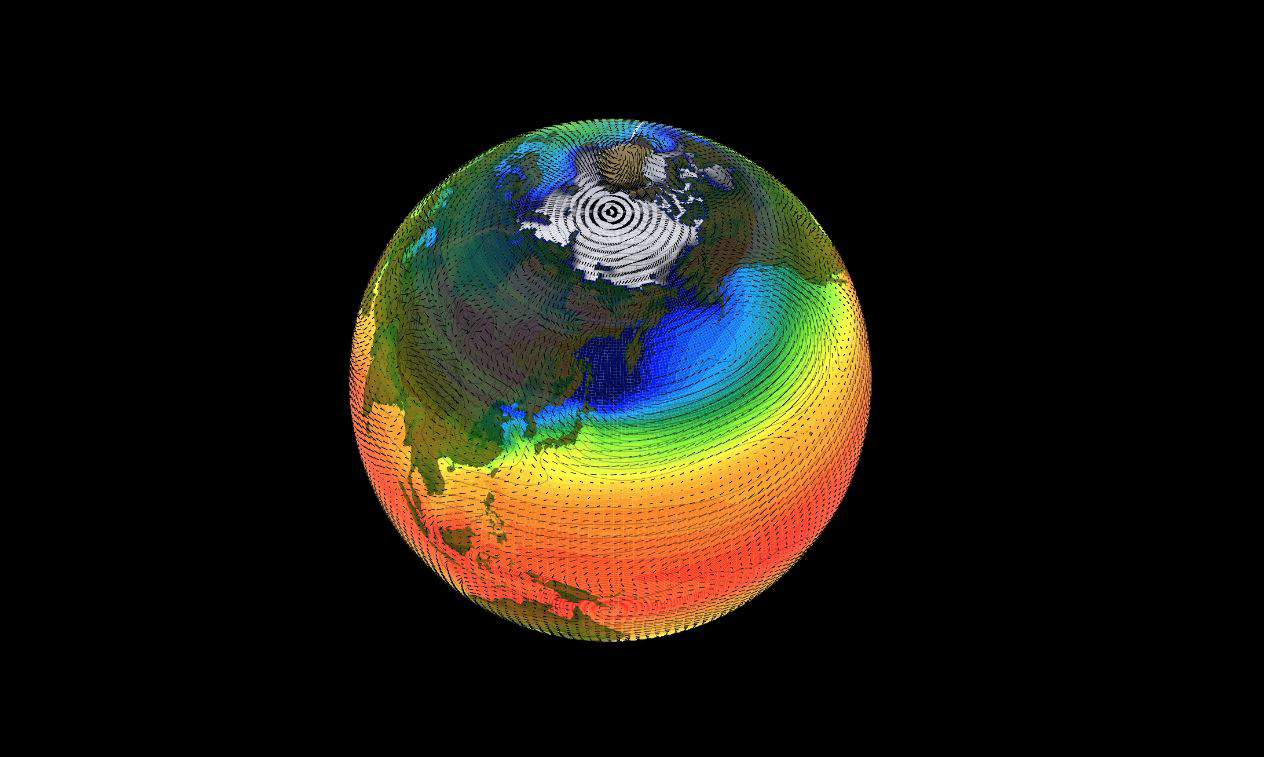
From Early Weather Charts to Complex Planetary Systems, the Story of How Scientists Learned to Predict a Changing World
The Birth of a Scientific Dream
Humanity has always been fascinated by the atmosphere. For centuries, the movement of clouds, winds, and rain seemed to follow a mysterious rhythm beyond human understanding. Ancient civilizations developed calendars and rituals around seasonal changes, but it was not until the early twentieth century that scientists began transforming weather observation into mathematical prediction. The seeds of modern climate modeling were planted by pioneers such as Lewis Fry Richardson, who imagined dividing the atmosphere into a grid of numerical boxes and calculating changes in temperature, pressure, and wind. His vision, though impossible to realize with the technology of his time, became the foundation of the computational revolution that would follow decades later.
In the years after World War II, the rise of digital computers allowed scientists to test Richardson’s idea on a small scale. The first weather simulations were crude and covered only regional conditions over short time spans. Yet they marked the beginning of a new scientific approach: representing Earth’s systems as equations and running them through machines capable of handling millions of calculations per second. What began as an attempt to forecast tomorrow’s weather would evolve into an effort to understand the entire planet’s climate behavior across centuries.
Early climate models focused primarily on atmospheric processes, using simplified representations of clouds and radiation. They could capture broad patterns like jet streams or monsoons, but the real world’s complexity required far more data than was available. Despite these limitations, these first models revealed a powerful truth. The climate could be simulated, tested, and understood through the language of mathematics. The atmosphere was no longer an enigma but a system of cause and effect that humans could analyze, predict, and potentially influence.
The Rise of Computational Power and Global Understanding
As computing technology advanced during the second half of the twentieth century, climate models became more sophisticated. Scientists began to include interactions between the atmosphere, oceans, and land surfaces, recognizing that these systems were inseparable. The oceans, with their ability to store vast amounts of heat, play a crucial role in moderating global temperature. Including them in simulations revealed patterns like El Niño and La Niña, which shape weather events worldwide. By the 1980s, models could reproduce the general circulation of the atmosphere and track how greenhouse gases affected global temperature trends.
These advancements required immense computational resources. The world’s most powerful supercomputers were often dedicated to climate simulations, running equations that described fluid motion, radiation transfer, and energy exchange. Each model run could take weeks or months to complete. The results, however, were revolutionary. For the first time, scientists could compare simulated climates with historical data and see how accurately their models matched reality. This validation process strengthened confidence in predictive modeling and provided the basis for assessing the impact of human activities on global warming.
Another breakthrough came with the integration of satellite observations. Launched in the late twentieth century, satellites began collecting global data on sea surface temperatures, atmospheric composition, and ice coverage. This continuous stream of high-resolution information allowed scientists to refine their models with unprecedented accuracy. Climate modeling evolved from a theoretical exercise into a practical tool capable of informing international policy. It became the backbone of global reports that assessed future climate scenarios, helping nations prepare for rising temperatures, shifting rainfall patterns, and melting ice caps.
Complex Systems and Coupled Models
The Earth’s climate is an intricate web of interactions among air, water, land, and living organisms. To capture this complexity, scientists began developing coupled models, known as Earth System Models, that combine physical, chemical, and biological processes into one computational framework. These models simulate not only the movement of air and water but also carbon cycles, vegetation growth, and the role of aerosols in reflecting or absorbing sunlight. The result is a far more holistic representation of the planet, where every variable influences and responds to the others in continuous feedback loops.
One of the most significant milestones in this development was the ability to represent carbon feedbacks in detail. As global temperatures rise, permafrost regions release trapped methane, a potent greenhouse gas that further accelerates warming. Forests absorb carbon dioxide but can become carbon sources when damaged by fire or drought. These feedbacks are critical to understanding the long-term stability of the climate system, and modern models now include them to produce more realistic forecasts. By combining physics, chemistry, and biology, Earth System Models provide a view of climate that approaches the interconnected complexity of the real world.
However, with complexity comes uncertainty. Every model relies on assumptions about how certain processes behave, such as how clouds form or how ice sheets respond to warming. These assumptions, known as parameterizations, introduce variability into projections. To address this, scientists use ensembles, running multiple simulations with slightly different parameters to generate a range of possible outcomes. The consensus among these simulations forms the basis of future climate predictions, giving policymakers a probabilistic understanding of what lies ahead.
From Global Models to Regional Forecasts
While global models provide valuable insights, their scale often limits the precision needed for local planning. A grid cell in a typical global model may represent an area of hundreds of kilometers, too large to capture specific regional features such as mountain ranges or coastlines. To overcome this limitation, scientists developed regional climate models that use finer spatial resolution. These models are nested within global ones, drawing boundary conditions from large-scale simulations but focusing on detailed dynamics within smaller areas.
Regional modeling has transformed the way communities understand climate change. It allows researchers to assess how rising temperatures will affect local agriculture, water availability, and weather extremes. For instance, high-resolution models can predict how heatwaves may intensify in cities due to the urban heat island effect or how coastal flooding risks will evolve as sea levels rise. These localized projections provide actionable insights for adaptation strategies, helping governments design resilient infrastructure and disaster response systems.
Advances in data assimilation have further improved accuracy. By continuously feeding real-time observational data into models, scientists can correct errors and refine forecasts on the fly. This dynamic process bridges the gap between weather prediction and long-term climate modeling, creating a continuum of understanding that spans hours to decades. In doing so, it helps societies prepare not just for the next storm but for the future climate that will shape generations to come.
The Role of Artificial Intelligence and Machine Learning
In recent years, artificial intelligence has become a powerful ally in the field of climate science. Machine learning algorithms excel at detecting patterns in large datasets, making them ideal for analyzing the massive quantities of information produced by modern climate models. AI can identify subtle relationships that traditional methods might overlook, such as connections between atmospheric pressure anomalies and long-term ocean cycles. It also accelerates the calibration process by automatically tuning model parameters to match observations, saving time and computational resources.
Neural networks are now being trained to emulate components of climate models, such as cloud formation or ocean mixing, which are among the most computationally expensive processes to simulate. These AI-driven approximations can dramatically speed up model performance without sacrificing accuracy. Furthermore, predictive algorithms can process satellite imagery in real time, improving the detection of environmental changes like deforestation, glacier retreat, or wildfire spread. This synergy between artificial intelligence and physical modeling marks a new phase in climate science where computation evolves alongside observation.
Perhaps the most transformative potential of AI lies in uncertainty quantification. By analyzing vast ensembles of model runs, machine learning can identify patterns in uncertainty and suggest where improvements will yield the greatest gains. This capability not only refines future predictions but also enhances confidence in the outcomes that inform global climate agreements. The marriage of human insight and algorithmic intelligence is reshaping how we understand and respond to planetary change.
Public Perception and Policy Impact
Beyond the realm of scientific research, climate models play a vital role in public understanding and political decision-making. Global reports produced by organizations such as the Intergovernmental Panel on Climate Change rely heavily on model data to communicate potential futures under different emissions scenarios. These projections are not merely academic. They form the basis for international climate treaties, economic planning, and environmental legislation. Policymakers use them to set targets for carbon reduction and to assess the potential costs of inaction.
However, public interpretation of model results is not always straightforward. The inherent uncertainty in projections can be misrepresented as unreliability, leading to skepticism about the validity of climate science. Communicating that uncertainty does not mean inaccuracy is one of the greatest challenges faced by scientists today. In reality, the convergence of multiple independent models on similar outcomes strengthens confidence in their conclusions. When dozens of models, developed by teams across the globe, all indicate rising temperatures and shifting weather patterns, the message is clear. The details may differ, but the direction is unmistakable.
Engaging the public in the process of climate modeling is becoming increasingly important. Citizen science initiatives allow individuals to contribute local observations that help validate and improve global datasets. Open-access modeling platforms are being developed to make climate science more transparent and inclusive. As awareness grows, so does the collective ability to act on scientific knowledge, turning complex data into meaningful decisions that affect the world’s future.
The Next Generation of Digital Earths
The evolution of climate modeling continues at a breathtaking pace. The next generation of models aims to simulate Earth as a fully digital twin, incorporating not just physical and biological systems but also human activity. Urbanization, energy use, transportation, and economic patterns will be integrated into these simulations, creating a holistic representation of the planet’s dynamics. This fusion of environmental and social data will provide a new level of insight into how human choices influence the global climate and how policy changes can alter the course of the future.
As quantum computing and AI merge with Earth system modeling, the line between simulation and reality will continue to blur. Researchers will be able to explore thousands of possible futures within a single day, testing the outcomes of mitigation strategies and adaptation plans. Climate models will become not just tools for understanding but instruments for planning and prevention. The ability to visualize potential futures in real time will empower humanity to make choices that sustain rather than endanger life on Earth.
The story of climate modeling is ultimately a story of human ingenuity. It reflects our desire to comprehend the forces that shape our world and to use that understanding to protect it. From hand-drawn weather charts to digital Earths running on supercomputers, the journey has been one of relentless curiosity and collaboration. The models we build are not merely simulations. They are mirrors that show us who we are, what we have done, and what we can still become if we choose the path of knowledge and responsibility.