

Artificial Intelligence and the Evolution of Scientific Discovery
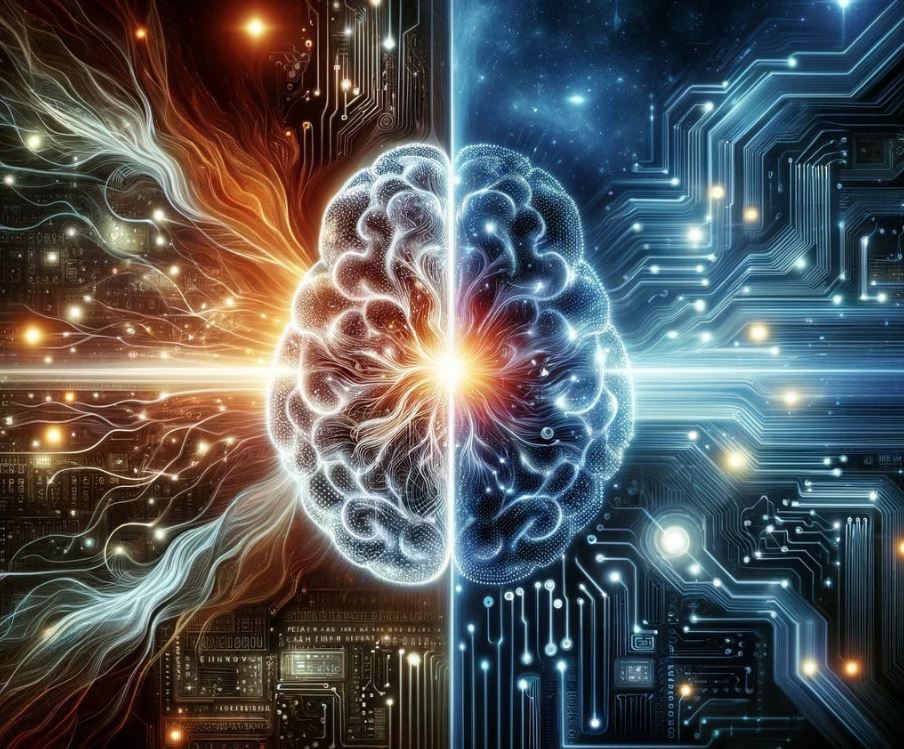
Machine Learning is Transforming the Future of Research and Innovation
The Emergence of Artificial Intelligence in Modern Science
Artificial intelligence has evolved from a speculative concept into a practical tool that is reshaping the very nature of scientific inquiry. Once limited to theoretical discussions about human cognition and computation, AI has become an indispensable part of laboratories, observatories, and data centers around the world. At its core, artificial intelligence is the simulation of human-like reasoning and learning through computer algorithms. These systems analyze massive datasets, identify patterns, and generate predictions far beyond the capacity of human calculation. In the context of scientific research, AI is not replacing human curiosity but enhancing it, providing researchers with a new lens through which to explore the unknown.
The integration of AI into scientific practice began gradually through the use of automated data analysis tools and simulation software. However, the exponential growth of data across disciplines has made AI essential for managing complexity. Fields such as astronomy, biology, physics, and climate science now rely on machine learning to process petabytes of information gathered from telescopes, particle accelerators, and environmental sensors. The result is a transformation of the scientific method itself, where hypothesis generation, experimentation, and analysis are all influenced by intelligent algorithms that accelerate discovery and reduce human error.
Machine Learning as a Catalyst for Discovery
Machine learning, a branch of artificial intelligence, is particularly influential in research because of its ability to identify relationships within complex datasets. Unlike traditional programming, where outcomes depend on explicit instructions, machine learning systems learn from data to improve their performance over time. This capability is invaluable in fields that generate more information than scientists can manually interpret. In genetics, for instance, algorithms are used to analyze DNA sequences and uncover links between genetic mutations and diseases. In physics, machine learning helps researchers detect subtle patterns in particle collisions that might indicate new fundamental particles or forces.
One of the most striking examples of AI-driven discovery occurred in astronomy. Neural networks trained on astronomical datasets have identified previously unnoticed exoplanets by detecting faint fluctuations in starlight. Similarly, in materials science, AI models predict the properties of new compounds, guiding experimental chemists toward the most promising candidates for superconductors or renewable energy applications. Machine learning also plays a critical role in medical imaging, where deep learning algorithms can recognize early signs of cancer and neurological disorders with precision equal to, or even surpassing, human experts. These breakthroughs demonstrate how AI transforms raw data into knowledge, bridging the gap between observation and understanding.
Automation and the Changing Role of Scientists
As artificial intelligence automates more aspects of research, the role of scientists is evolving from manual data analysis to creative interpretation and model supervision. Automation enables laboratories to conduct experiments continuously, using robotic systems that operate with minimal human intervention. These autonomous labs can synthesize chemical compounds, run simulations, and optimize parameters in real time, vastly increasing efficiency. By integrating AI with robotics, scientists have created environments that can test thousands of hypotheses in the time it once took to evaluate a handful. The fusion of AI and automation marks a shift toward data-driven discovery, where algorithms generate hypotheses and humans provide context and ethical oversight.
This transformation raises important questions about the human dimension of science. While AI enhances productivity, it also challenges traditional notions of creativity and intuition. Can a machine truly innovate, or does it merely extrapolate from existing data? The answer depends on how AI is used. When paired with human insight, artificial intelligence acts as a powerful partner that expands intellectual horizons. However, when used without proper understanding or transparency, it risks producing results that are difficult to interpret or verify. The new era of automated research therefore requires scientists to develop not only technical expertise but also critical thinking skills to guide and evaluate algorithmic output responsibly.
Big Data, AI, and Interdisciplinary Collaboration
The rise of artificial intelligence in scientific research is inseparable from the explosion of big data. Modern science relies on immense quantities of information collected through sensors, satellites, sequencing machines, and social networks. AI provides the computational power necessary to transform this information into meaningful insights. For example, in climate science, machine learning algorithms analyze decades of atmospheric data to refine models of temperature, precipitation, and carbon cycles. In neuroscience, AI helps decode brain activity by recognizing patterns in complex neural signals. Such interdisciplinary applications illustrate how artificial intelligence serves as a universal tool that transcends the boundaries of traditional disciplines.
Collaboration between computer scientists and domain experts has become essential. A biologist studying protein folding, a physicist analyzing quantum behavior, and a computer engineer developing algorithms now share a common language through data. This collaboration has given rise to hybrid fields such as computational biology, astroinformatics, and materials informatics. These fields combine scientific curiosity with algorithmic innovation, leading to discoveries that would have been impossible within isolated disciplines. AI not only accelerates the pace of research but also fosters a new culture of interconnected exploration where knowledge flows freely across disciplines and national borders.
Ethics, Transparency, and the Future of AI in Research
As artificial intelligence becomes more powerful, ethical considerations grow increasingly important. The use of AI in research must be guided by principles of transparency, accountability, and fairness. One major challenge lies in the interpretability of AI models. Many algorithms, especially those based on deep learning, operate as black boxes whose internal reasoning is difficult to trace. This lack of transparency can undermine confidence in scientific results and hinder reproducibility. To address this issue, researchers are developing explainable AI systems that provide clear rationales for their predictions, ensuring that human scientists can verify and validate outcomes.
Data privacy and bias are also critical concerns. Machine learning models reflect the quality and diversity of their training data. If datasets are incomplete or biased, the resulting conclusions may perpetuate inaccuracies or discrimination. In medical research, for example, biased datasets can lead to diagnostic models that perform better on certain populations than others. Responsible use of AI therefore requires rigorous data curation and continuous ethical oversight. Furthermore, the automation of research raises questions about intellectual ownership. When an AI system generates a hypothesis or a design, who should receive credit—the machine, its creators, or the supervising scientists? These questions highlight the need for new frameworks of authorship and accountability in the age of intelligent discovery.
AI in Predictive Science and Simulation
One of the most promising frontiers of artificial intelligence is its ability to simulate and predict complex phenomena. AI-driven models are revolutionizing climate forecasting, epidemiology, and cosmology. In epidemiology, machine learning algorithms analyze patterns of infection to predict the spread of diseases and evaluate containment strategies. During global health crises, these predictive tools provide crucial insights for policymakers and healthcare professionals. In cosmology, AI simulates galaxy formation and the behavior of dark matter, allowing scientists to test theories about the origins of the universe. Such simulations would take centuries to complete with traditional computational methods, but AI drastically reduces processing time while maintaining precision.
Predictive modeling also has transformative applications in materials science and engineering. Algorithms can estimate the performance of new materials before they are physically produced, saving time and resources. This capability is especially valuable in renewable energy research, where scientists seek efficient solar cells and durable batteries. By combining theoretical principles with data-driven prediction, AI bridges the gap between concept and realization. The result is a more agile and responsive scientific process, capable of adapting to emerging challenges and opportunities in real time.
Artificial Intelligence in the Era of Open Science
The global movement toward open science has amplified the potential of AI to advance research. Open datasets, shared repositories, and collaborative platforms provide the raw material that machine learning models need to thrive. By democratizing access to information, open science allows researchers from all backgrounds to contribute to discovery. AI tools, in turn, make these vast datasets accessible and usable, uncovering patterns that would remain hidden in isolation. Projects such as open genomic databases, global weather archives, and astronomical surveys have become testbeds for AI-driven analysis. They illustrate how transparency and collaboration can accelerate progress and ensure that knowledge benefits all of humanity.
However, open access must be balanced with data protection. Sensitive information, especially in healthcare and social sciences, must be handled with care to protect privacy and consent. Artificial intelligence can help enforce these safeguards through automated anonymization and secure data-sharing protocols. The fusion of AI and open science creates a powerful model for collective intelligence, where technology amplifies the capabilities of researchers and citizens alike. This synergy promises not only faster discoveries but also a more inclusive and equitable global research ecosystem.
The Future of Intelligent Research
The integration of artificial intelligence into scientific research represents a turning point in human knowledge. What began as a set of algorithms designed to mimic reasoning has become a partner in exploration, capable of revealing the intricate patterns that define our universe. As AI continues to evolve, it will not only expand the frontiers of what we can discover but also redefine the nature of discovery itself. The challenge for humanity is to harness this power wisely, ensuring that artificial intelligence remains a tool for enlightenment rather than exploitation.
The future of intelligent research lies in collaboration, transparency, and ethical stewardship. Scientists must continue to explore new ways to combine computational power with human insight. Education will play a vital role in preparing future generations to navigate this new landscape, blending data literacy with critical thinking and moral awareness. Artificial intelligence offers immense promise for solving the most pressing challenges of our time, from disease and hunger to energy and climate. By aligning technology with human values, science can move forward into an era where intelligence, both natural and artificial, works in harmony to illuminate the mysteries of existence.