

Astrobiology and the Quest for Life Beyond Earth
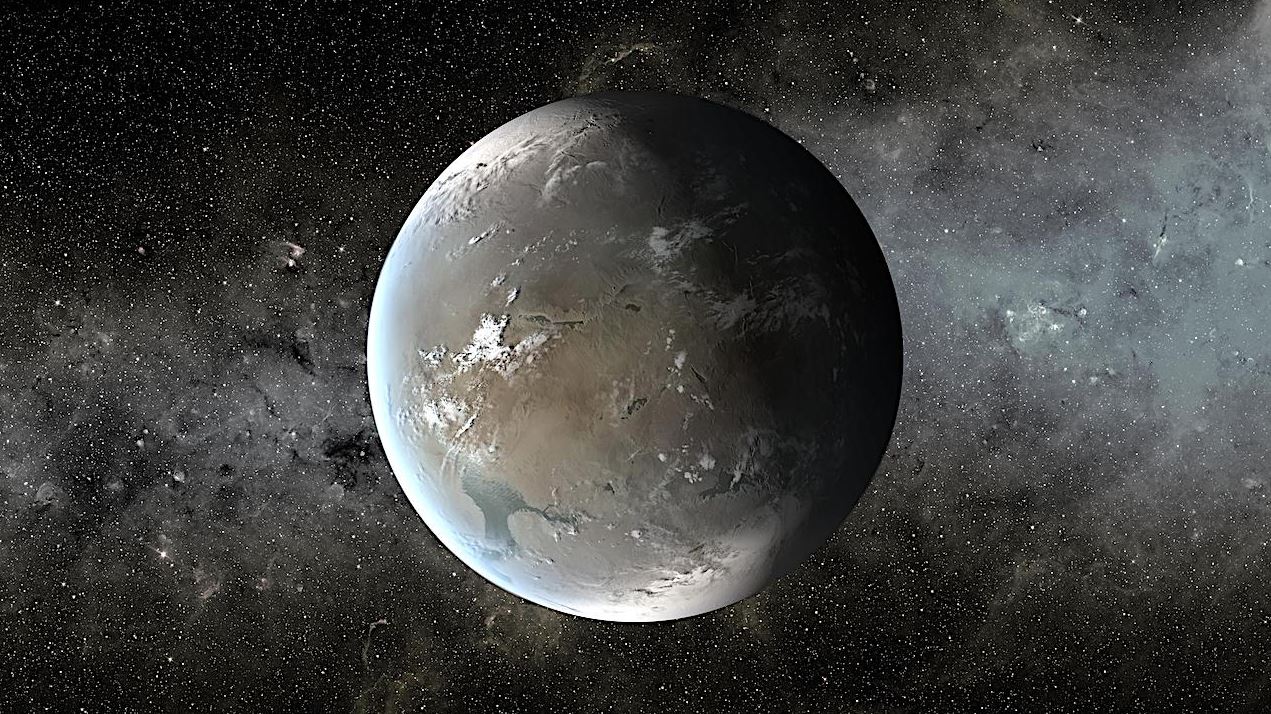
The Frontiers of Existence in the Cosmic Ocean
The Origins of Astrobiology as a Scientific Discipline
Astrobiology is the science of life in the universe. It seeks to answer one of humanity’s oldest questions: are we alone? The field draws from astronomy, biology, chemistry, geology, and planetary science to explore where and how life might arise beyond Earth. Its origins trace back to early thinkers who wondered about life on other worlds, but the discipline only gained scientific grounding in the twentieth century. With the advent of space exploration, scientists could finally study other planets directly, moving the question of extraterrestrial life from speculation to investigation. The discovery of extremophiles on Earth, organisms thriving in boiling acid, frozen tundra, and deep ocean vents, redefined our understanding of habitability. If life can survive in such harsh conditions here, perhaps it can survive elsewhere too.
The term astrobiology gained traction after the 1950s, when the study of life’s potential beyond Earth became intertwined with planetary exploration. The Viking missions to Mars in the 1970s marked a turning point. They carried the first instruments designed to search for microbial life on another world. Although the results were inconclusive, the experiment laid the groundwork for modern astrobiology. Over the decades, advances in chemistry and microbiology have helped scientists understand the possible chemical origins of life. The study of amino acids, lipids, and nucleic acids revealed that life’s building blocks are not unique to Earth, but are found throughout space in meteorites and interstellar clouds. This realization expanded the scientific view that the ingredients for life may be universal.
Defining Life in the Cosmic Context
One of the great challenges in astrobiology is defining life itself. On Earth, life is carbon-based, water-dependent, and structured around DNA and RNA. But this definition may be too narrow for a universe full of possibilities. Astrobiologists must consider life that may not look or function like anything on Earth. Some theories suggest that silicon-based organisms could exist in environments where carbon would be unstable. Others speculate that life could thrive in methane or ammonia instead of water. To search for alien life, scientists must first understand what signatures life might leave behind, chemical traces, metabolic by-products, or patterns of organization that reveal biological activity.
Researchers use a concept called biosignatures to identify potential life indicators. On Earth, oxygen, methane, and carbon dioxide in the atmosphere are products of biological processes. If telescopes detect similar atmospheric compositions on distant exoplanets, they may point to life. However, not all biosignatures are unambiguous. Abiotic processes, such as volcanic activity or photochemical reactions, can produce similar effects. This complexity makes the detection of life an exercise in caution and interpretation. Astrobiologists strive to refine their models to distinguish between biological and geological signals, ensuring that future discoveries are based on solid evidence rather than wishful thinking.
Habitability and the Goldilocks Zone
The concept of habitability lies at the heart of astrobiology. For life as we know it, certain environmental conditions must be met. The planet must have liquid water, a stable atmosphere, and a temperature range that allows complex chemistry. These conditions define the so-called Goldilocks zone, the region around a star where it is neither too hot nor too cold for liquid water to exist. Earth resides comfortably within the Sun’s habitable zone, which has fueled the idea that similar conditions elsewhere could harbor life. However, recent discoveries have shown that the concept of habitability may be far broader than once believed. Moons like Europa and Enceladus, despite being far from the Sun, possess subsurface oceans warmed by tidal forces. These environments may host microbial life independent of sunlight.
Modern telescopes such as the James Webb Space Telescope have revolutionized the search for habitable worlds. They can analyze the light from exoplanets to determine their atmospheric composition and surface conditions. Thousands of exoplanets have been identified, with many lying in the habitable zones of their stars. Some orbit red dwarfs, stars much cooler than the Sun, yet stable enough to maintain habitable conditions for billions of years. These discoveries suggest that potentially life-supporting planets may be common in the galaxy. The study of habitability now extends beyond simple temperature models to include magnetic fields, plate tectonics, and chemical cycling, all of which influence a planet’s capacity to sustain life.
Life on Mars and the Search for Evidence
Mars remains the prime candidate for finding evidence of extraterrestrial life within our solar system. Its surface shows signs of ancient rivers, lakes, and even possible oceans. The presence of sedimentary rocks and mineral deposits formed in water suggests that Mars once had a climate suitable for life. Modern missions, including NASA’s Perseverance rover and the European Space Agency’s ExoMars program, are designed to analyze Martian soil for organic compounds. Perseverance is collecting rock samples that will eventually be returned to Earth for detailed analysis. The discovery of methane plumes in the Martian atmosphere has fueled speculation, as methane can be produced both biologically and geologically. Determining the source of that methane could answer one of science’s most profound questions.
Although no direct evidence of life has been found yet, the data from Mars missions continue to reshape our understanding of planetary evolution. Scientists now believe that early Mars may have been warm and wet, with a thicker atmosphere and a magnetic field that protected it from solar radiation. Over time, the planet lost most of its atmosphere, becoming the cold desert we see today. Yet subsurface aquifers or pockets of briny water might still exist, offering refuges for microbial life. Future missions aim to drill deeper below the surface, where life, if it ever existed, may still persist hidden from the harsh radiation of space.
Ocean Worlds and the Hidden Habitats of the Solar System
Beyond Mars, several icy moons within our solar system present compelling environments for life. Europa, a moon of Jupiter, and Enceladus, a moon of Saturn, are among the most intriguing. Both have global subsurface oceans beneath their icy crusts. Data from the Cassini spacecraft revealed that Enceladus ejects plumes of water vapor containing organic molecules, hydrogen, and salts, ingredients essential for life. These findings suggest that hydrothermal vents at the ocean floor could provide the energy needed to sustain microbial ecosystems, much like similar vents on Earth’s ocean floors. Europa’s surface, marked by cracks and ridges, hints at an active ocean below, where tidal heating keeps water liquid despite the frigid outer environment.
These ocean worlds expand the definition of habitability. They demonstrate that life may not require sunlight or a warm surface, but rather chemical energy and liquid water. Planned missions such as NASA’s Europa Clipper and the proposed Enceladus Orbilander will probe these moons in detail, searching for organic compounds and possible biosignatures. If life exists in these hidden oceans, it would confirm that biology can emerge independently in multiple environments within a single solar system. Such a discovery would profoundly alter our understanding of life’s universality and resilience.
Exoplanets and the Search for Distant Biospheres
The discovery of exoplanets, planets orbiting stars beyond our solar system, has transformed astrobiology into a truly cosmic science. Since the first confirmed exoplanet was found in the 1990s, thousands have been cataloged, with many residing in the habitable zones of their stars. Some of these planets are Earth-sized and may have atmospheres, oceans, and climates capable of supporting life. The diversity of planetary systems is staggering, from gas giants orbiting close to their stars to rocky super-Earths circling distant red dwarfs. Each world offers a unique laboratory for studying the potential for life under different conditions.
Advanced telescopes use spectroscopy to analyze starlight filtered through planetary atmospheres. This technique allows scientists to detect gases that could indicate biological activity. For example, simultaneous detection of oxygen and methane in the same atmosphere would be a strong signal of potential life, since these gases typically react and would not coexist without a replenishing source. Astrobiologists also consider the planet’s albedo, cloud cover, and seasonal variations, which can provide indirect evidence of vegetation or microbial processes. The challenge lies in distinguishing biological signals from false positives caused by geological or chemical processes. Despite these challenges, each new discovery brings us closer to identifying a truly Earth-like world beyond our solar neighborhood.
The Role of Artificial Intelligence in the Search for Life
Artificial intelligence has become an indispensable tool in the modern search for extraterrestrial life. The massive datasets generated by telescopes, spacecraft, and simulations require sophisticated algorithms to analyze efficiently. Machine learning models can identify patterns in data that might escape human eyes, such as subtle atmospheric variations or faint radio signals. AI systems are also used to optimize telescope time by predicting which exoplanets are most likely to yield promising results. In planetary exploration, AI assists in autonomous navigation, allowing rovers to make decisions in real time without waiting for commands from Earth. These innovations accelerate the pace of discovery and reduce the time between observation and insight.
Beyond data analysis, AI also plays a role in hypothesis generation. Algorithms can model complex chemical networks, predicting which reactions might produce biosignatures under different planetary conditions. By simulating millions of scenarios, AI helps scientists identify the most plausible environments for life. In the future, autonomous AI-driven probes may explore distant worlds, collecting and interpreting data without human intervention. This combination of human creativity and machine precision will likely define the next era of astrobiology, expanding our ability to seek life across the cosmos.
The Human Perspective and the Future of Discovery
The search for extraterrestrial life is more than a scientific pursuit. It is a reflection of humanity’s desire to understand its place in the universe. Whether we find microbes beneath the ice of Europa or intelligent civilizations orbiting distant stars, such discoveries will reshape our philosophy, religion, and identity. Even the absence of evidence has profound implications, reminding us of the fragility and uniqueness of life on Earth. Astrobiology connects us to the cosmos, inspiring cooperation and curiosity across nations and generations.
The future of astrobiology lies in exploration, collaboration, and imagination. Missions to Mars, Europa, and distant exoplanets will continue to push the boundaries of human knowledge. The development of next-generation telescopes will allow us to peer deeper into space and detect the faint whispers of life beyond our world. Whether we find it or not, the search itself enriches humanity. It reminds us that we are part of a vast, interconnected universe, where every question opens a door to new understanding. The quest for life beyond Earth is ultimately a quest to know ourselves and the infinite possibilities of the cosmos that we call home.