

Symbiosis of Steel and Sentience
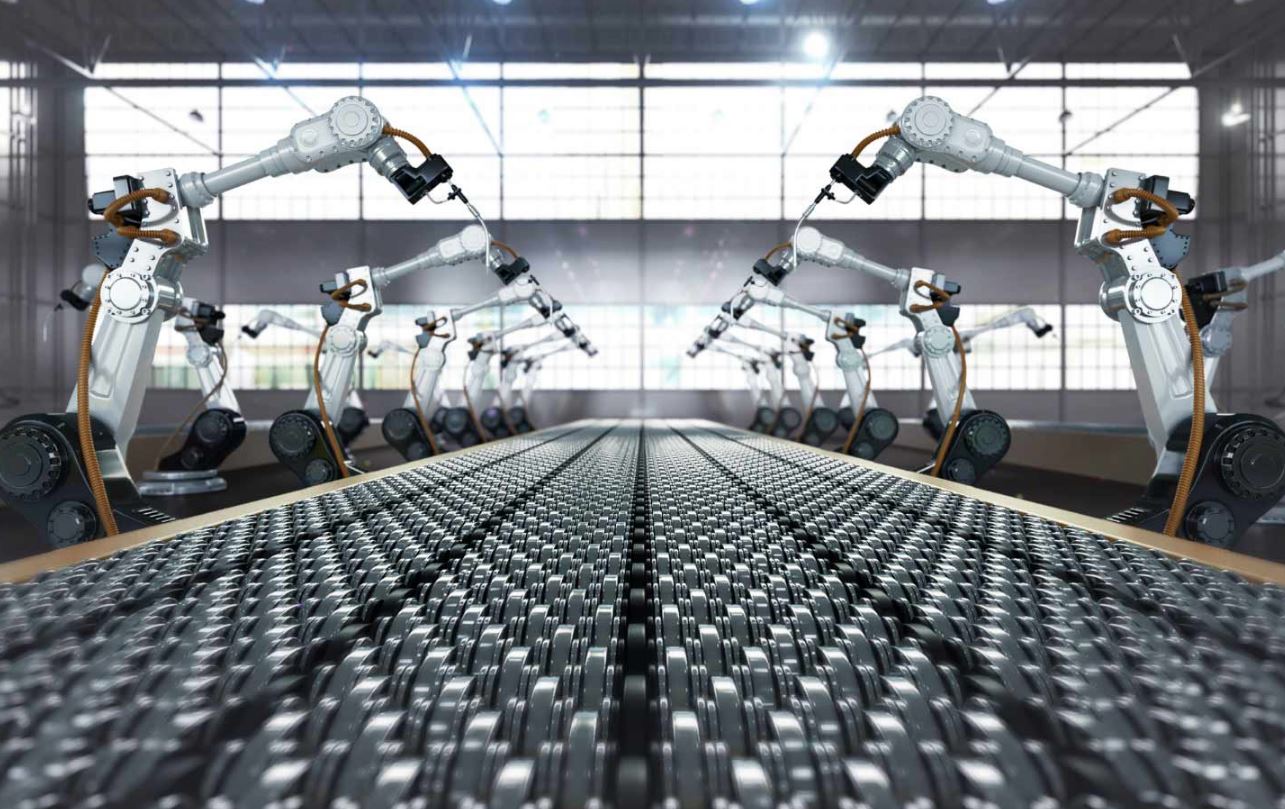
Collaborative Robotics is Transforming the Future of Work, Science, and Society
The Emergence of a Shared Workforce
For centuries, machines have served as tools designed to extend human capability. From the first mechanical looms to the industrial assembly line, automation has evolved alongside civilization itself. Yet a new era is unfolding, one where robots no longer function merely as extensions of human hands, but as partners capable of perception, decision-making, and learning. This partnership between humans and machines, often referred to as human-machine collaboration, represents one of the most profound transformations in modern science and technology. It is not about replacement, but cooperation, where the strengths of both entities merge to achieve levels of efficiency, creativity, and precision previously unimaginable.
The driving force behind this collaboration is the rise of collaborative robots, or cobots. Unlike traditional industrial robots that are isolated within safety cages, cobots are designed to work safely alongside humans. They can sense proximity, adapt to unpredictable behavior, and learn from human interaction. In industries ranging from manufacturing to healthcare, cobots perform complex tasks that require delicacy and accuracy, while humans contribute judgment, problem-solving, and emotional intelligence. This synergy is redefining the boundaries of work and introducing a new model of shared intelligence that has the potential to reshape every aspect of production and innovation.
Designing Trust Between Humans and Machines
Trust is the foundation of any meaningful collaboration, and this applies as much to human-machine interaction as it does to human partnerships. Engineers and cognitive scientists are working to design robots that not only perform tasks accurately but also communicate intentions clearly. A robot must be predictable, transparent, and responsive in order to earn a human’s confidence. This is achieved through the integration of artificial intelligence, sensory feedback, and adaptive behavior that allows machines to interpret human gestures, tone, and context.
For example, in medical environments, surgical robots such as the Da Vinci system assist doctors in performing operations with microscopic precision. The robot enhances dexterity and steadiness, but the surgeon remains in control, guiding every movement. This delicate balance of control and autonomy requires trust that is built through years of research, rigorous safety testing, and consistent performance. Similarly, in industrial settings, cobots are programmed to anticipate human movement and reduce speed or stop when a worker approaches. These built-in ethical and safety frameworks not only protect humans but also help establish an environment of cooperation where both entities can operate harmoniously.
Artificial Intelligence as the Cognitive Bridge
Artificial intelligence acts as the nervous system of modern robotics, bridging the gap between mechanical precision and cognitive flexibility. Machine learning algorithms allow robots to recognize patterns, predict outcomes, and adapt to changing circumstances. Through reinforcement learning, a robot can improve its performance over time by analyzing data from human interactions and environmental feedback. This self-optimizing capability makes robots more intuitive and capable of understanding human expectations without explicit instructions for every scenario.
One of the most remarkable applications of this collaboration can be seen in autonomous research labs. In such environments, robotic systems can conduct experiments around the clock, collecting data and refining hypotheses, while human scientists interpret the results and design new experiments. The relationship becomes cyclical, with each learning from the other. The robot gains new operational strategies through data-driven learning, and the human gains deeper insights through accelerated experimentation. This dynamic exchange has already accelerated discoveries in material science, genomics, and drug development, proving that artificial intelligence is not simply a tool for automation but a collaborator in the pursuit of knowledge.
Emotional Intelligence and Social Robotics
While industrial robots focus on precision and productivity, a new generation of social robots is being designed to interact emotionally with humans. These machines can recognize facial expressions, interpret tone of voice, and respond with empathy. Social robotics has profound implications for fields such as education, therapy, and eldercare. Robots like PARO, a therapeutic seal designed for dementia patients, demonstrate how emotional interaction can enhance well-being. By providing companionship and comfort, such robots show that collaboration between humans and machines is not limited to the intellectual or physical realm but extends into the emotional dimension as well.
Developing emotional intelligence in robots requires an interdisciplinary approach that blends neuroscience, psychology, and engineering. Machines must not only detect emotions but also respond appropriately, maintaining sensitivity to cultural norms and individual preferences. The goal is not to replicate human emotion but to complement it, providing support where human attention is limited or unavailable. Social robots have the potential to reduce loneliness, improve learning outcomes, and provide a consistent presence in environments where human resources are scarce. This human-centric approach is shaping a future where technology enhances compassion rather than replacing it.
Ethical Considerations and the Shifting Role of Humanity
The growing integration of robotics into daily life raises complex ethical questions. How much autonomy should a machine possess? Who bears responsibility when an intelligent system makes an error? And to what extent should robots be involved in decisions that affect human lives? These are not hypothetical concerns but urgent challenges that societies must address as the line between human and machine collaboration becomes increasingly blurred.
Ethicists and policymakers are calling for transparency, accountability, and inclusivity in the development of robotics. Algorithms must be free from bias, and decision-making systems should be explainable so that humans can understand how outcomes are determined. In workplaces, it is essential that automation complements rather than replaces human workers, preserving dignity and purpose in employment. The ultimate goal is not to create machines that dominate but to foster a partnership that amplifies human potential while respecting ethical boundaries. Collaboration must evolve hand in hand with responsibility, ensuring that progress serves humanity rather than displacing it.
The Expanding Horizon of Human-Machine Creativity
Beyond factories and laboratories, robotics is entering creative fields once thought to be uniquely human. Artists are using robotic arms to sculpt, paint, and perform music in collaboration with human creators. Engineers and designers are leveraging robotic precision to translate imagination into tangible works of art and architecture. In these domains, collaboration takes on a poetic quality, where the precision of the machine complements the emotion of the human mind. This intersection between creativity and technology is redefining what it means to create and expanding the boundaries of expression itself.
For instance, robotic choreography has become an emerging art form, where dancers perform alongside machines that respond to rhythm and motion in real time. Such performances are not simply demonstrations of technology but reflections of coexistence. They showcase a future where robotics is not a threat to human expression but a partner that enriches it. The creative synergy between humans and machines offers a glimpse of how technology can deepen, rather than dilute, the essence of human imagination.
Toward a Future of Symbiotic Intelligence
The story of human progress has always been intertwined with the story of technology. From the first tools to the rise of artificial intelligence, each innovation has changed how humanity interacts with the world. The age of human-machine collaboration represents the next chapter in this evolution. It is not a future where humans are replaced by robots, but one where both coexist as partners in innovation, exploration, and creation.
As robotics continues to advance, the boundaries between the organic and the mechanical will grow increasingly fluid. Machines will continue to learn, adapt, and empathize, while humans will continue to push the limits of creativity and purpose. The collaboration between steel and sentience will not only define the future of work but also shape the moral and intellectual evolution of society. In this shared journey, the measure of progress will not be how intelligent machines become, but how deeply they enhance the humanity within us all.